Why Curiosity Belongs in Every Classroom

Unicorn Jazz™ for educators

What a squirrel, a worm, and a good question can teach us about learning

Would you rather read to a squirrel or a worm?

I might pick the worm. I’d want to know whether it would stick around for the ending or wiggle off halfway through. Then I’d ask the children, “What book would you read to it?” That’s the part I’m really looking forward to when I bring this question into my Unicorn Jazz™ school assemblies. I get to hear the story they imagined.
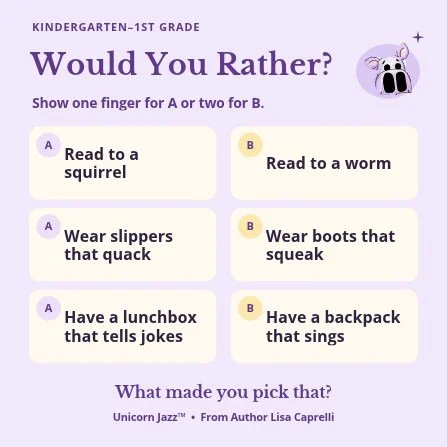
A Would You Rather reading game with Javi invites kindergarten and first-grade students to vote for a squirrel or a worm as their storytime audience.
Would You Rather? A storytime question from my Unicorn Jazz™ assembly for kindergarten and first grade.

I was a shy kid. Writing helped me find my voice, and studying social psychology gave me words for things I’d wondered about for years. What makes someone feel welcome? What makes a child feel brave enough to share an idea? I still think about those questions when I write a book or plan a school visit. A playful question gives more children a way into the conversation. They can point, draw, tell a partner, or raise a hand when they’re ready.

What curiosity can do for learning

Think of the last book you stayed up late reading. You wanted to know what happened next. I think about that feeling when I plan a read-aloud. I can turn the page right away, or I can stop and ask, “What did you notice that makes you think she’ll do that?” Suddenly we have a reason to look back at the picture or reread a line together.
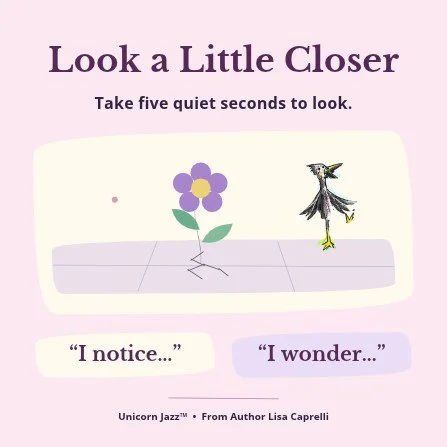
A bird stands beside a flower growing through a crack in the sidewalk. The card asks children to look quietly, then say what they notice and wonder.
“I notice…” and “I wonder…” give students two ways to talk about what they see.

In a study of about 6,200 children, kindergarteners whose parents rated them as more curious tended to score higher on direct reading and math assessments. The researchers accounted for factors such as children’s ability to regulate their attention and behavior. The findings show an association. They leave open the question of whether a specific classroom practice would raise scores. (Shah and colleagues, Pediatric Research, 2018)

There’s also evidence that wanting an answer can matter for memory. In a trivia study, 60 children and young teens remembered more answers to questions they had been especially curious about. An earlier experiment with adults found a similar pattern. I take a simple idea from that. Before I tell children the answer, I can give them a moment to want it. (Fandakova and Gruber, Developmental Science, 2021. Gruber and colleagues, Neuron, 2014.)

Make room for the next question

In one experiment, researchers randomly assigned 103 children ages 5 to 7 to practice asking questions or listening carefully during eight one-on-one science lessons. Later, the children who practiced asking questions gave up more stickers for the chance to watch another science video. That tells us something specific about how much those children valued a chance to learn more. (Park and colleagues, npj Science of Learning, published online 2025)

And the way we answer matters. In two studies of preschoolers, children were more likely to ask a new follow-up question after they got a real explanation. When the reply didn’t explain why, they were more likely to ask the original question again. The next time a child asks, “But why?” I want to hear what they’re still trying to figure out. Sometimes I can help with an explanation. Sometimes I get to say something I want children to feel comfortable saying, too. “I don’t know yet. How could we find out?” (Frazier, Gelman, and Wellman, Child Development, 2009)
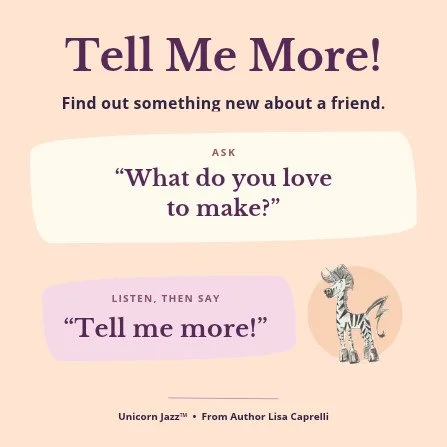
A conversation card invites students to ask a friend what they love to make and follow up with “Tell me more!”
“Tell me more!” gives a classmate room to finish the thought and share what matters to them.

What happens when teachers make that kind of wondering part of the school year? In a randomized study across 134 schools in Türkiye, fourth graders in schools offered a curiosity-focused teaching program remembered more of what they learned and scored higher in science. Teachers had training and materials to use throughout the year. It’s a reason for me to keep making time for questions after the assembly is over. (Alan and Mumcu, American Economic Review, 2024)

Three ways to try it at school
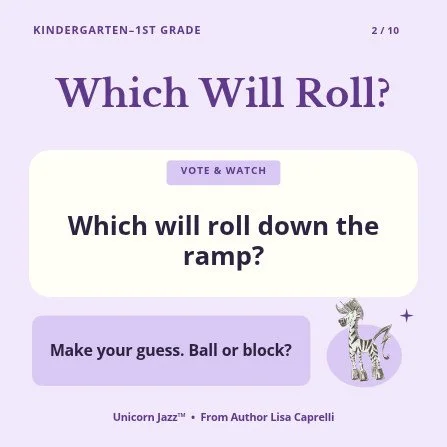
An A-or-B science prompt asks whether a ball or a block will roll down a ramp.
Which Will Roll? A ramp experiment for kindergarten and first grade.

Kindergarten and first grade. Put a ball and a block at the top of a ramp. Let children point to the one they think will roll. Try both, then ask what they noticed about the shape and the way it moved.
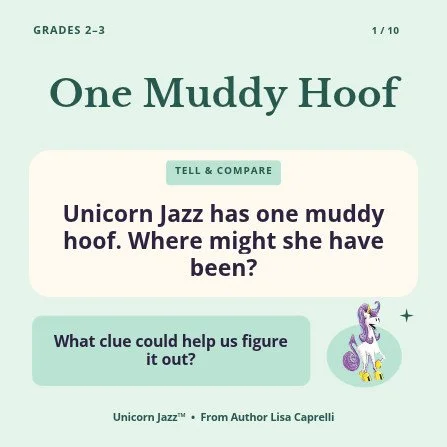
Unicorn Jazz has one muddy hoof. The writing prompt asks students where she might have been and what clue would help them find out.
One Muddy Hoof, a story prompt for second and third grade.

Second and third grade. Tell students Unicorn Jazz arrived with one muddy hoof. Invite two ideas about where she’s been, then ask, “What clue would help us figure it out?” Those ideas can become the first lines of two very different stories.
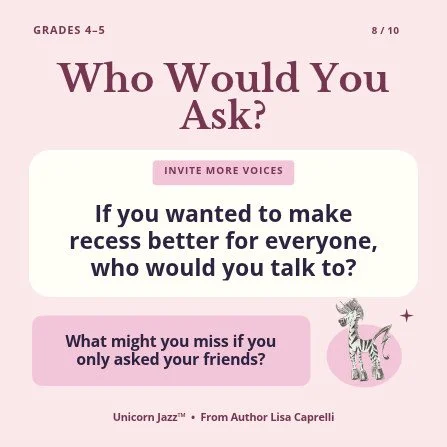
A classroom discussion card asks whose ideas students would seek to make recess better for everyone.
Who Would You Ask? A recess conversation for fourth and fifth grade.

Fourth and fifth grade. Ask, “If you could make recess better for everyone, who would you talk to?” Invite students to write one question for someone who spends recess differently from them. Their best idea might come from a person they hadn’t thought to ask.

For principals and teachers, I’d start with one routine you can come back to. Keep a space for student questions in the classroom or library. Let children write, draw, dictate, or share in a language they’re comfortable using. Pick one question to revisit Friday. Ask what the class found out and what they’re still wondering. That last question tells you where you might go together next.

Keep a question for yourself, too

When I’m writing and a character’s choice feels too easy, I ask what that character is afraid to say. When I’m reading, I sometimes stop over a single sentence and wonder why the author chose that word. Curiosity gives me another way into a story, whether I’m writing it or reading it. A review of 10 studies found that curiosity and creativity tend to go together, although how researchers measured each one affected how strong the relationship looked. (Schutte and Malouff, The Journal of Creative Behavior, 2020)

You can try this away from a book, too. Ask someone, “What’s something you love that I haven’t asked you about?” Give them time to think. Then listen long enough to ask about one detail you didn’t expect. That’s what I love about a good question. The answer can change what you notice about a person the next time you see them.

And if you picked the squirrel, I still want to know what book you’d bring.
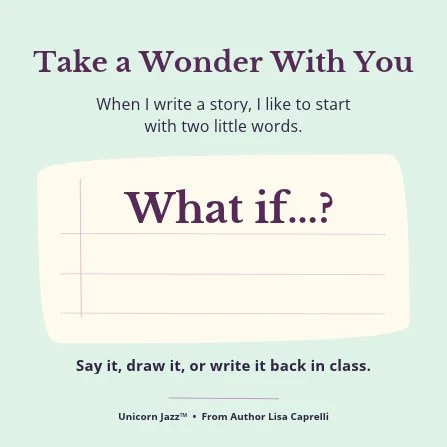
Lisa Caprelli’s lined story-starter card invites students to say, draw, or write a question beginning “What if?”
A “What if?” question can become a drawing, a conversation, or the start of a story.

More curiosity activities for your classroom

Open a collection below and select a card to see the full JPG.

Whole-group curiosity warm-ups
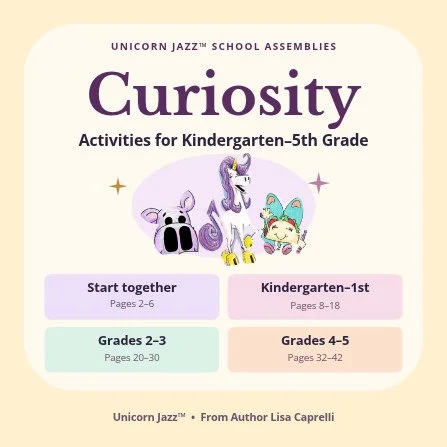
Lisa Caprelli’s collection cover with Unicorn Jazz characters and activities for kindergarten through fifth grade.
The Unicorn Jazz™ curiosity activity collection
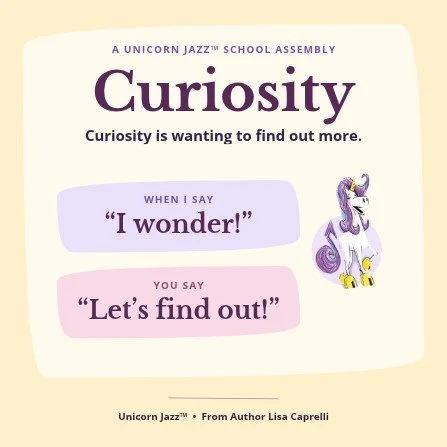
Unicorn Jazz explains curiosity as wanting to find out more and invites children to answer “I wonder!” with “Let’s find out!”
Curiosity, explained by a children’s author
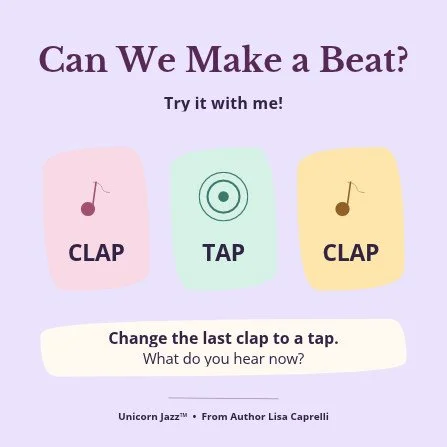
A clap-tap-clap pattern invites children to change the last clap to a tap and listen for the difference.
Can We Make a Beat?
Kindergarten and first grade
Javi the hippo introduces activities for young children to look, listen, and make a guess.
Curiosity activities for kindergarten and first grade
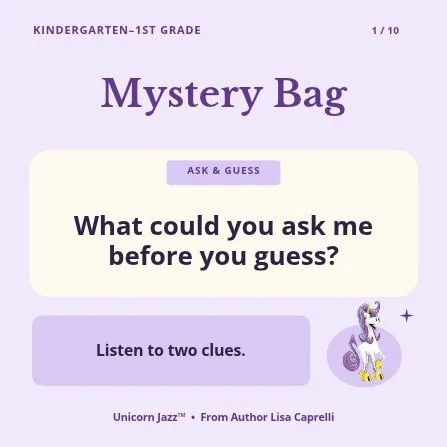
Unicorn Jazz prompts young learners to listen to two clues and ask a question before they guess what is in the bag.
Mystery Bag
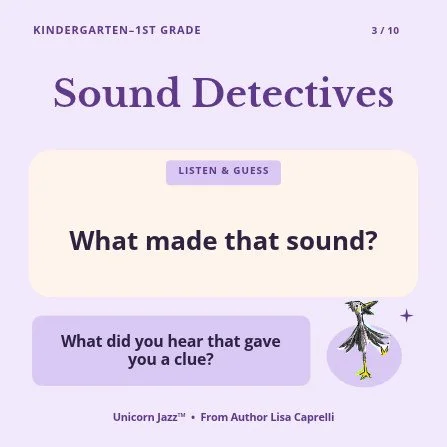
A listening game asks young children to identify a mystery sound and describe the clue they heard.
Sound Detectives
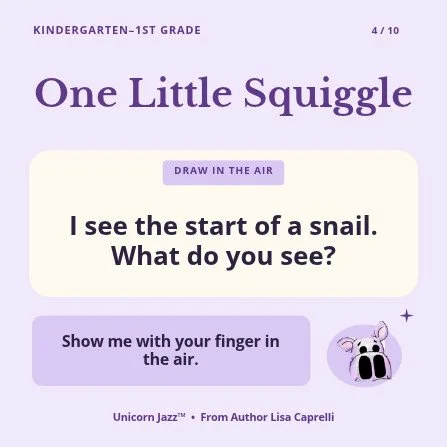
A drawing prompt starts with a curved line that could become a snail and invites children to imagine something else.
One Little Squiggle
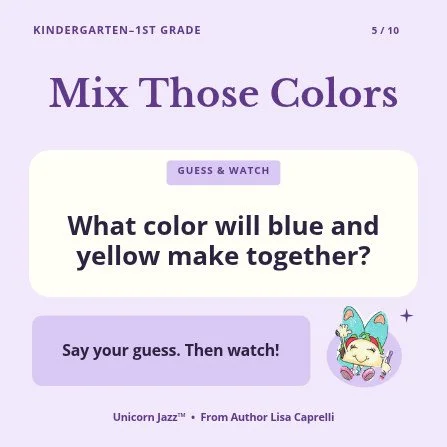
A kindergarten activity asks children to predict what will happen when blue and yellow paint mix.
Mix Those Colors
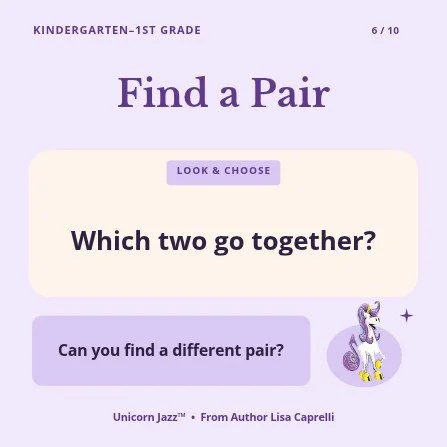
A sorting activity asks children which two objects go together and challenges them to find another pair.
Find a Pair
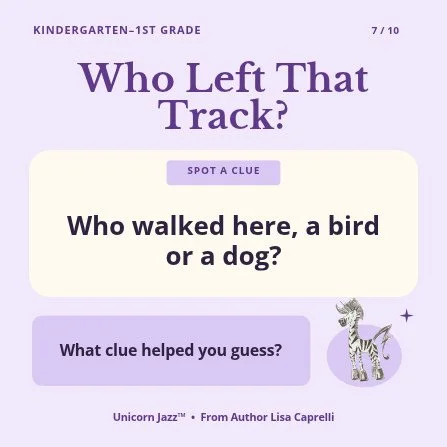
A nature guessing game asks if the tracks came from a bird or a dog and invites children to explain their clue.
Who Left That Track?
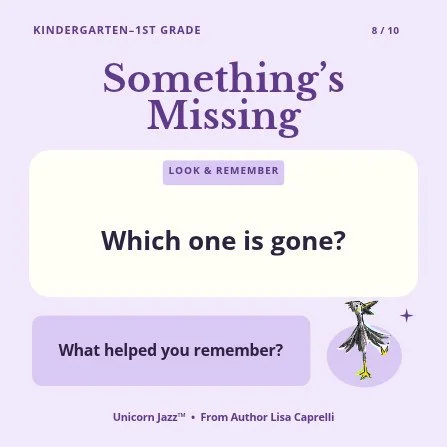
A memory game challenges young learners to name the object that disappeared and say what helped them remember it.
Something’s Missing
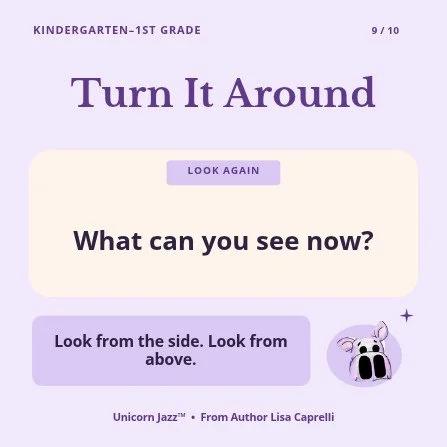
A classroom card invites kids to look at the same object from the side and from above and notice what changes.
Turn It Around
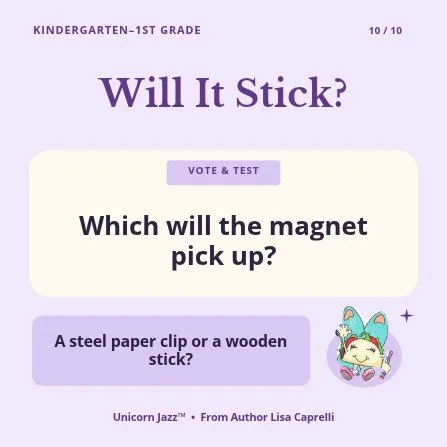
A magnet experiment asks children to predict whether a steel paper clip or a wooden stick will be picked up.
Will It Stick?
Second and third grade
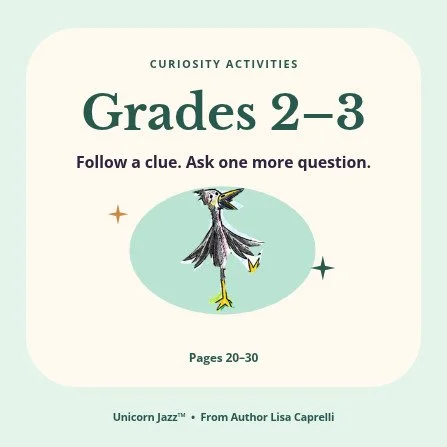
Wood the bird introduces second- and third-grade activities about following clues and asking another question.
Curiosity activities for grades two and three
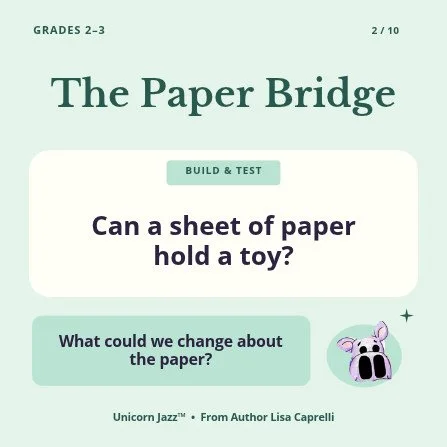
A STEM challenge asks whether a sheet of paper across two cups can hold a toy and what students could change about the paper.
The Paper Bridge
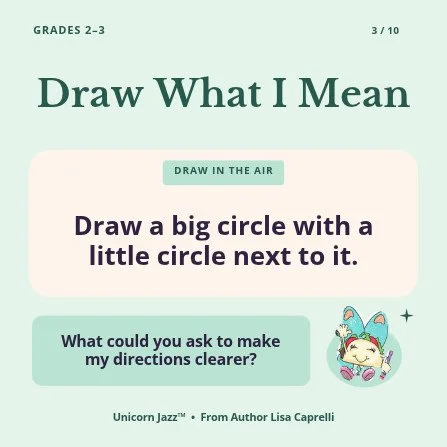
A directions game asks students to draw two circles and think of a question that would make the instructions clearer.
Draw What I Mean
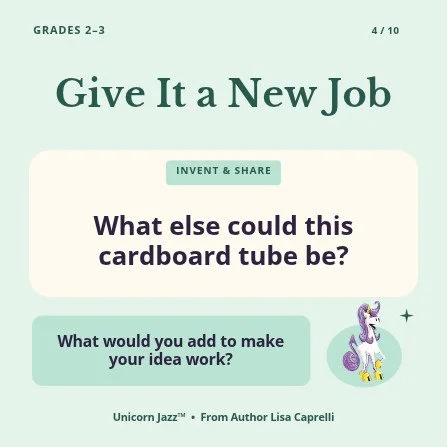
A creative reuse prompt asks children to imagine a new use for a cardboard tube and what they could add to make it work.
Give It a New Job
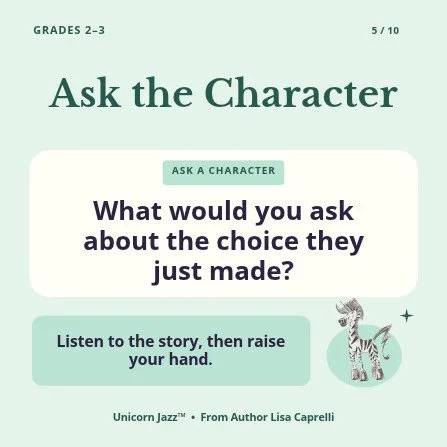
A read-aloud activity invites students to ask a story character a question about the choice they just made.
Ask the Character
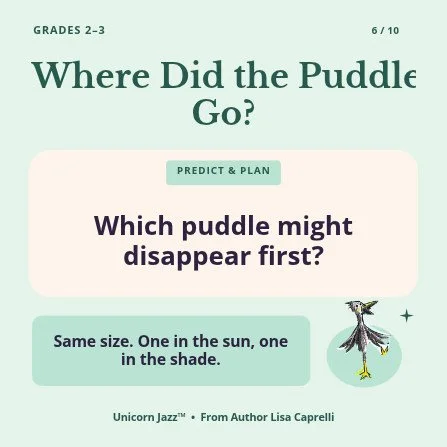
A science inquiry card asks children to predict which of two same-size puddles in sun and shade disappears first.
Where Did the Puddle Go?
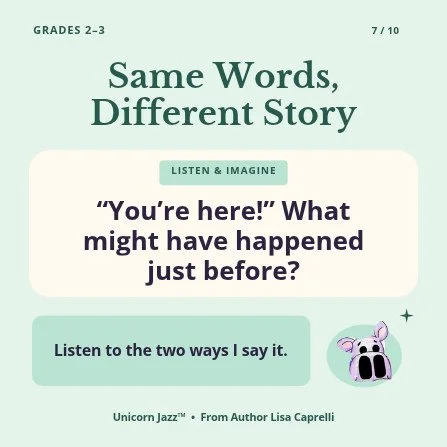
Students hear “You’re here!” spoken in two ways and imagine what happened just before each reading.
Same Words, Different Story
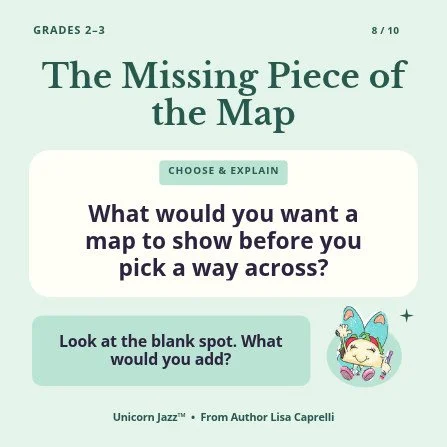
A map activity asks children what information they need before choosing a route across a blank spot.
The Missing Piece of the Map
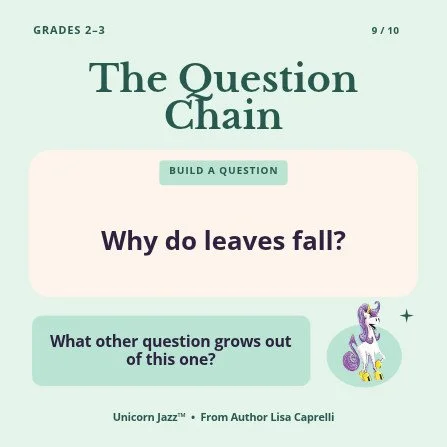
An inquiry card starts with “Why do leaves fall?” and asks students to build a new question from it.
The Question Chain
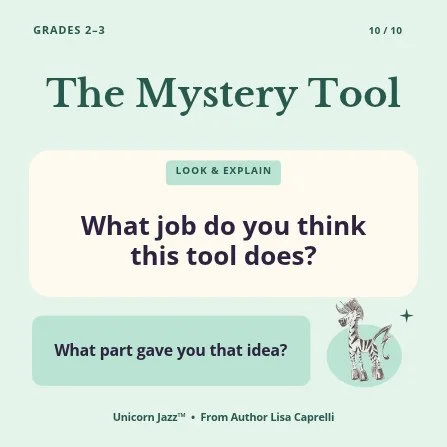
A mystery-tool prompt asks students to infer what a tool does and name the part that provided a clue.
The Mystery Tool
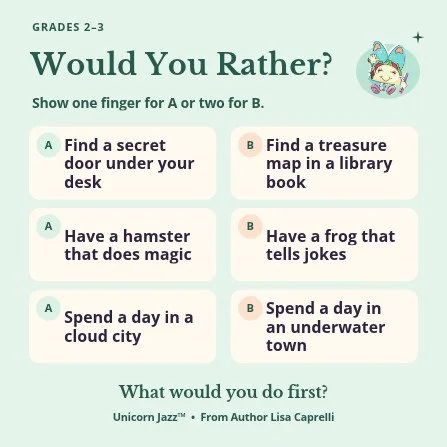
The Flying Taco introduces a grades two and three game about a secret door under a desk or a treasure map in a library book.
Would You Rather Find a Secret Door or a Treasure Map?
Fourth and fifth grade
Trezekke introduces upper-elementary activities that invite students to try another point of view.
Curiosity activities for grades four and five
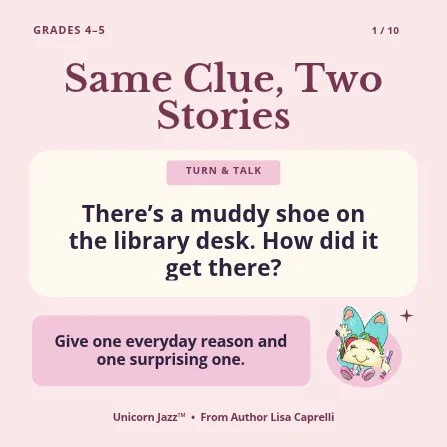
A writing prompt asks for one everyday and one surprising explanation for a muddy shoe on a library desk.
Same Clue, Two Stories
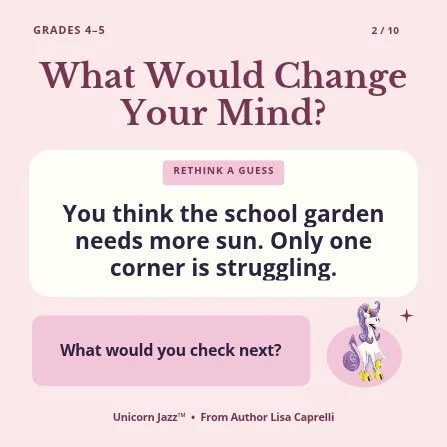
A school-garden scenario asks students what they’d check after learning that only one corner is struggling.
What Would Change Your Mind?
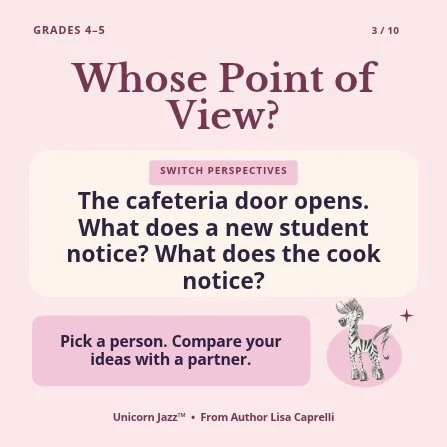
Students compare what a new student and the cook might notice when the cafeteria door opens.
Whose Point of View?
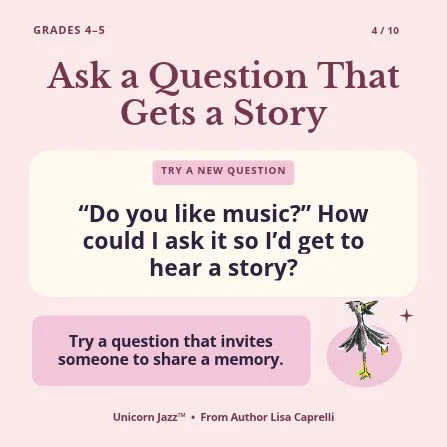
A discussion card asks students to turn a yes-or-no question about music into one that invites someone to share a memory.
Ask a Question That Gets a Story
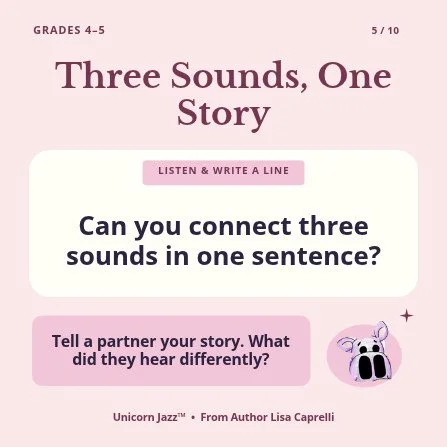
A listening and writing activity asks partners to connect three sounds in a one-sentence story and compare details.
Three Sounds, One Story
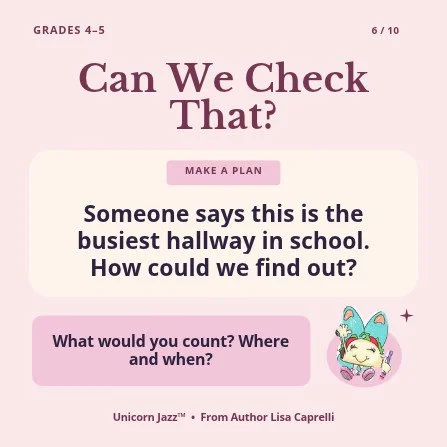
An evidence-gathering prompt asks how students would test a claim about the busiest hallway in their school.
Can We Check That?
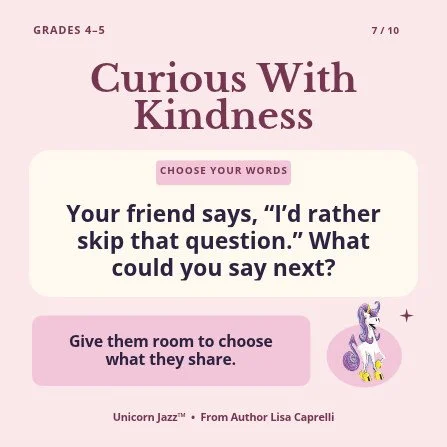
A discussion card asks how to respond when a friend would rather skip a question, giving them a choice about what they share.
Curious With Kindness
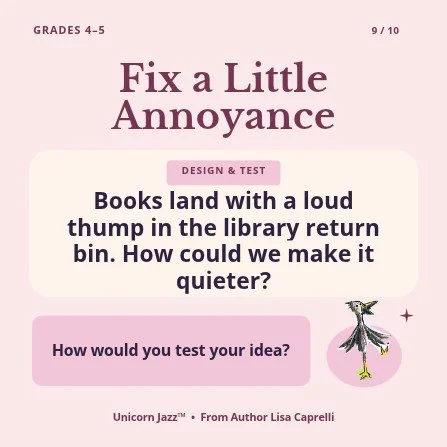
An engineering prompt asks how to make a library return bin quieter and how to test a possible design.
Fix a Little Annoyance
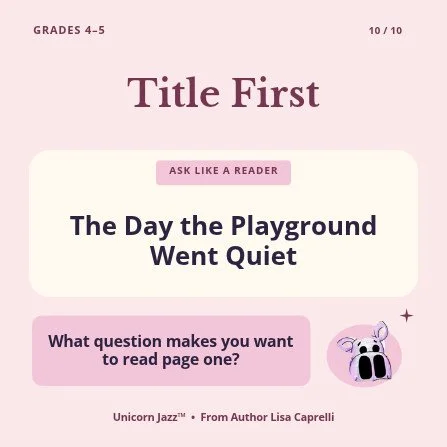
A reading prompt asks which question would make students turn to page one of an imagined book called The Day the Playground Went Quiet.
Title First
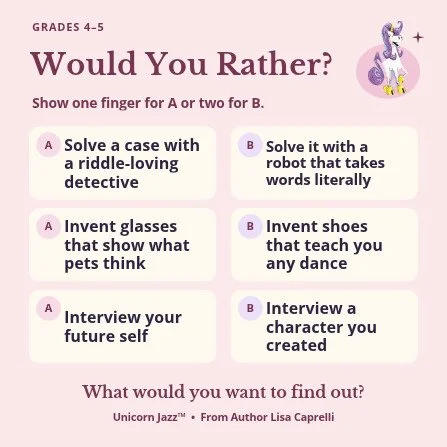
Unicorn Jazz introduces grades four and five choices about solving a case, inventing something, and interviewing a future self or fictional character.
Would You Rather Interview Your Future Self or a Character?
Next
Next

February Popular Reading Days to Celebrate Literacy in Schools